Dostoyevsky isn’t difficult
Other than the names. The names are difficult.
When I was twelve or fourteen I got halfway through War and Peace. Unfortunately, the vagaries of Russian names befuddled me, and pretty soon I didn’t know what was going on and didn’t really care. But for a long time after this point, I carried the fat paperback around, and read it ostentatiously at the coffee shop where the pretty barista worked. (For the record, this gambit was not successful.)
It would be a while before I next visited Russia, in my grandmother’s apartment. I picked an old copy of Crime and Punishment off the shelf by the fireplace. It was inscribed to my great uncle. Just the title sounds foreboding: a serious, difficult book, to be read with spectacles and pursed lips.
I started reading. This was my introduction to Dostoyevsky, whose reputation preceded the meeting. I found myself breezing along, smirking at the descriptions of human nature.
Yes, the classic Russian novels run long. Yes, the names are a nightmare to figure out until you’re used to it. (It was even worse for me: I discovered that I don’t actually read names, I just pattern match, and I have sometimes gotten hundreds of pages into a novel before I realize that I have no clear sense of the the middle syllables of the protagonist’s name.)
The Russians, now that I was slightly older, were nothing like I expected.
The Russians are hilarious. And the prose is easier to read than Dickens, let alone Joyce. Yes, the content is often difficult, and disturbing. But the prose? The prose is clear as water! English translated from Russian has a glorious clarity, and, I think, an inherent dry wit. It’s totally different from the interminably-meandering frankenparagraphs of, say, Michel de Montaigne.
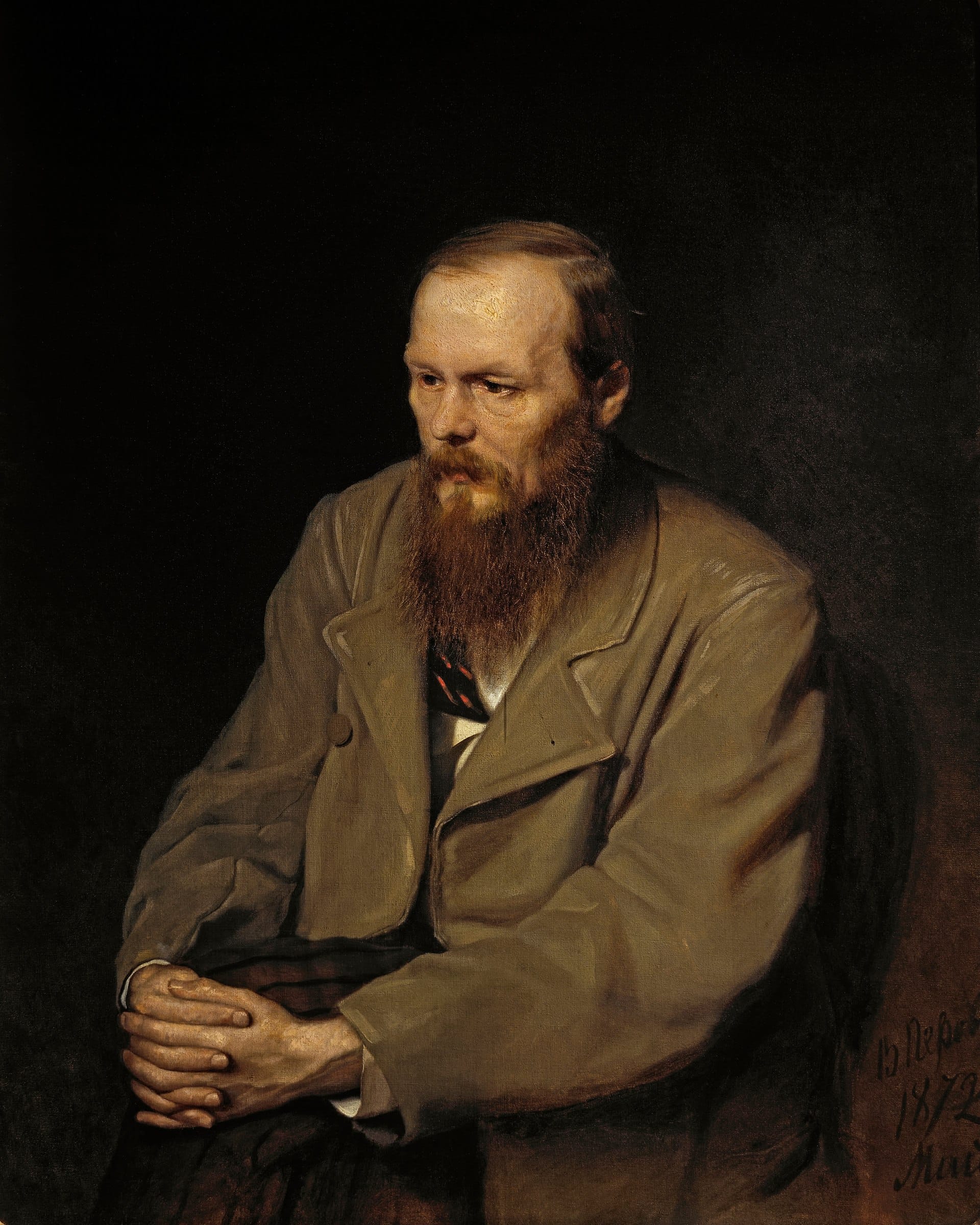
Go read a bit of the old Tolstoy, it’s free on Gutenberg. Isn’t it downright lucid? Not only is it clear, and full of descriptions of people and their foibles that make the mouth twitch, plenty of it is downright vulgar. The Classics aren’t some highfalutin thing; they’re stories, made up by flawed human beings who spent more time than average watching other flawed human beings being human. What elevates Dostoyevsky over a newspaper reporter is how tangibly he cares, because, it seems, he’s been though it himself. (Many pieces fell into place when I read just how short and hard a life Dostoyevsky lived.)
I read the out-of-copyright Constance Garnet translation of War and Peace. I found it eminently readable, and I sought out Garnet translations for all the Russians after that, even though Pevear and Volokhonsky et al. are generally better regarded these days.
I’m not the first to observe these facts about the classics. I think it was G.K. Chesterton who wrote a wonderful essay on the fact that the Great Books are often, themselves, eminently readable, and it’s only the lesser interpretations of them that are difficult, and require (further) interpretation by professional academic interpreters.
I’ve read books that I understood every word of but had no clue what was going on (Voyage to Arcturus); and books where I understood very few words and had only a vague sense of what was going on (Goethe’s Faust; the rhymes were nice); and books that scrambled my brains like duck eggs (Ulysses); and books that made me cringe but also feel stupid (A.E. Van Vogt after my A.E. Van Vogt phase); and books that made me go Aaaah (Gödel, Escher, Bach); and books that made me yawn loudly and give up (The Glass Bead Game); and stark books (the Remembrance of Earth’s Past trilogy; Blindsight). These books, in their peculiar ways, I found difficult.
These books all made me realize: the Russians ain’t the difficult ones. Dostoyevsky’s stories endure, near as I can tell, not because they are difficult, but because they are beautifully, beautifully simple.
Re-read the last chapter of The Brothers Karamazov before you tell me I’m wrong.